

Tuesday, April 21, 2026
Last November, Senator Becca Rausch—Senate Co-Chair of the Joint Committee on Environment and Natural Resources (ENR)—made the disappointing and poorly justified decision to send S.588 (the Senate version of the climate superfund act) to study. This happened the night before our campaign’s legal experts were slated to meet with her to address her stated concerns about legality.
This past January, House ENR Co-Chair Representative Christine Barber followed suit, sending H.1014 (the House version of the climate superfund act) to study and effectively killing the bill for the current two-year legislative session. This outcome is deeply disappointing; it stands in sharp contrast with legislators’ personal assurances of support and from their representative obligations to their constituents who overwhelmingly poll in support of the bill. Worse yet, it was the result of an undemocratic process that shut out constituents and advocates through a lack of transparency.
The Timeline
In September, H.1014 was publicly heard in the Joint Committee on Environment and Natural Resources (ENR). Our allies and coalition partners testified, highlighting their economic, legal, public health, and environmental justice expertise in support of the bill. The August 21, 2025 announcement of the hearing was the last public announcement on the status of the bill before February 2026.
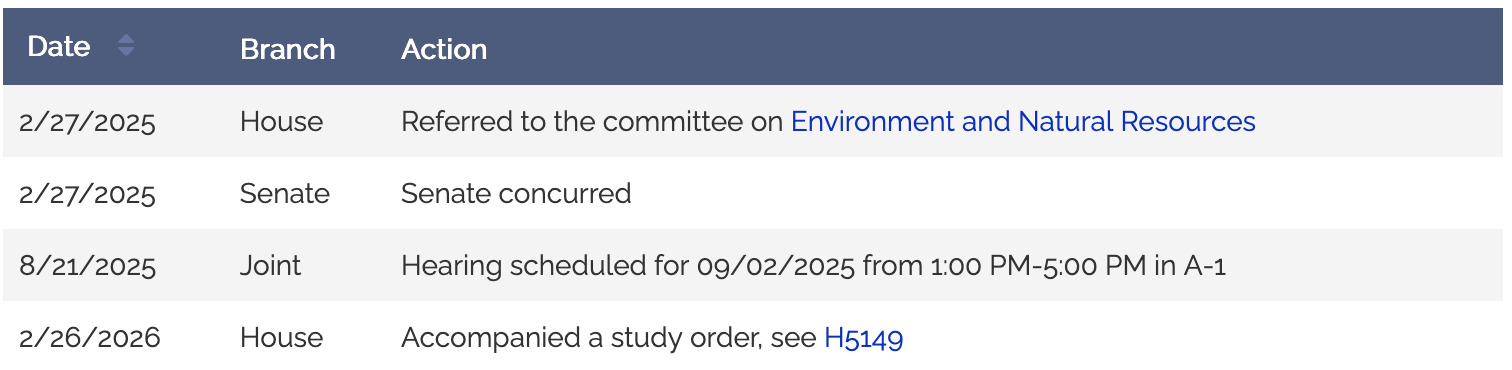
Screenshot from the MA Legislature website for H.1014, the Climate Superfund Bill.
In November, according to the House’s newly ratified Joint Rule 10, the ENR committee should have come to a decision on the bill, but all the campaign heard was radio silence. The Make Polluters Pay campaign made repeated requests to the chair’s office for information; these solicitations were either dodged or ignored altogether.
In December, the campaign heard whispers that an extension had been granted for the bill, pushing back the deadline and giving the committee more time to come to a decision. Still, the campaign heard nothing from the chair’s office or from members of ENR on where this stood. The campaign retroactively heard that the bill was extended to December 3rd, although nothing was ever posted online. Legislators said that per the new House rules, if a bill is not acted upon by the deadline it will be sent to study automatically.
The campaign decided that was unacceptable; legislators must vote and tell their constituents where they stand. So in January, our campaign kept advocating for a vote on the bill, but the campaign continued to receive unclear signals from committee members. Had the bill already been sent to study? Would the committee commit to a vote?
In February, five months after the bill was heard publicly and six months after the last public announcement about its status, young constituents from the Massachusetts Youth Climate Coalition met with the House Chair. Under pressure from her constituents, the chair finally looped the campaign in. Committee staff notified the campaign that a committee vote had occurred two weeks prior, on January 23, and the bill was sent to study. In other words, after a five-month period of near silence in the face of repeated outreach, the first update the campaign got from House ENR was that a decision had already been made.
What Happened?
H.1014 wasn’t sent to study by itself. In fact, because of State House practices, only an activist with eagle eyes would have spotted our bill in the wreckage. See for yourself what legislators on the committee saw before voting:
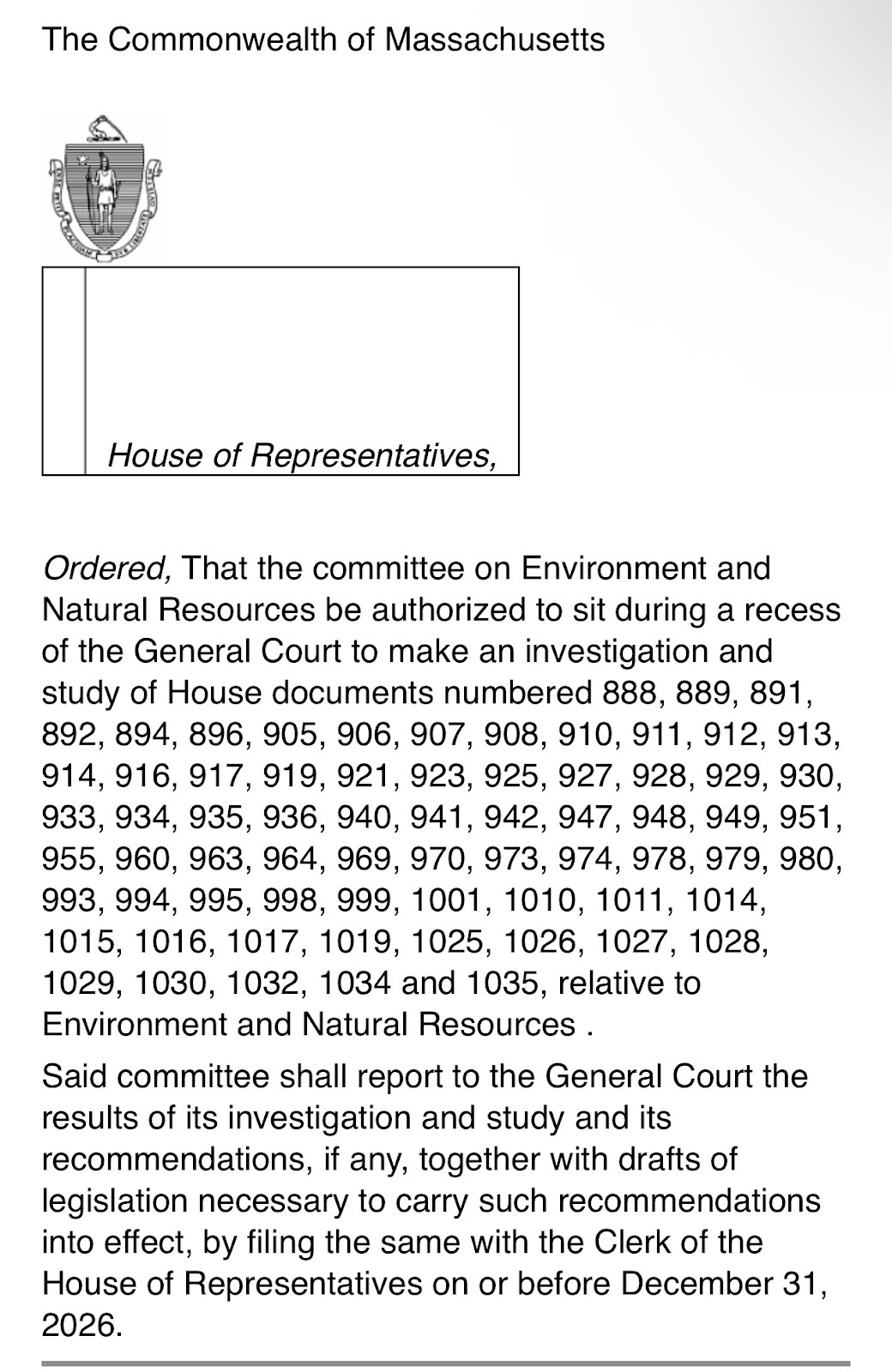
Image description: Internal House ENR study order titled “ENR Study Order 1.22.26”. If you look closely, House bill 1014 can be seen in a long, dense list alongside 68 other bills.
This is called a bundle, and it’s a fundamental failure of the legislative process. Handled by the Chair’s office, these bundles make it difficult for committee members to track the fate of individual bills. Some legislators reported that they weren’t given the option to vote on individual bills. You’re reading that right—instead of handling individual bills on their merits, our elected officials were presented with a binary, take-it-or-leave-it decision on 69 distinct issues at once—even critically necessary bills like H.1014 that grew out of massive grassroots pressure and overwhelming public support.
The result? Six members voted in favor of the study order, four members reserved their right (a sort of abstention), and one member voted against. Wondering how your specific rep voted? Here’s the breakdown, straight from what the committee finally shared under pressure on February 17:
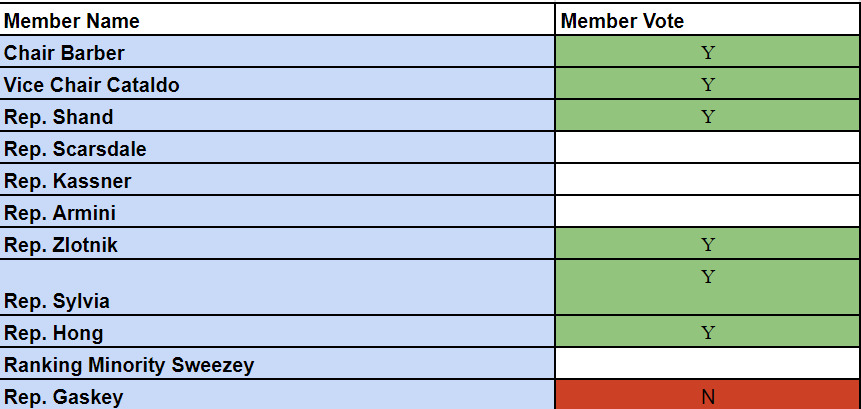
A screenshot from the internal committee spreadsheet, shared by the committee with advocates. “Y” is a favorable vote, “N” an adverse vote, and blanks show reserved rights.
At first glance, this may seem discouraging. While the end result was a loss for the campaign, the spread of votes tells a more nuanced story. Normally, committee members vote in lockstep with the chair, which is what happened last session. This is especially true in the House, where stipends and district funding are closely tied to loyalty to leadership. This session, however, what we saw was the chair squeaking by with a slim majority, a sign that people power has been moving the needle in the right direction. Last session, the full committee sent the bill to study. This session, only six out of eleven did. If the campaign keeps applying pressure for greater transparency and accountability, committee members will shift away from active opposition or passivity and towards standing up for what their constituents are demanding: a climate superfund.
Why Does This Matter?
The Climate Superfund Bill (H.1014/S.588) is morally simple and financially imperative: it requires the world’s biggest carbon emitters to pay for the climate damages they knowingly caused. Currently, Massachusetts taxpayers foot 100% of the bill for climate resilience and adaptation, not to mention the accelerating human health costs. The bill would have generated billions of dollars and thousands of new jobs for in-state projects, dedicated 40% of funding to environmental justice communities, and upheld fair labor standards. Vermont and New York already both passed climate superfunds. Massachusetts had the chance to join them, but instead, leadership chose to act against the will of the people and drown the bill in a sea of numbers.
What Can I Do?
The legislature may have made up its mind for the session, but our movement is only growing stronger. Here are some actions you can take:
- Contact your rep! Make it abundantly clear to our elected representatives that the outcry won’t stop until this passes. If your legislator is a member of the ENR committee, send them an email or call their office thanking them if they abstained from voting or voted against the study order. If they voted in favor, share your disappointment and reiterate your support for the bill. Tell them what projects in your community could have been funded!
- Help grow the movement! Sign the petition if you haven’t already done so, and share the petition with your network.
Support efforts to pass a municipal resolution in your locality! Check out the workshop recording here, and join an upcoming biweekly grassroots campaign meeting to connect with people in the movement working on this effort right now! If you have any questions, please feel free to reach out to campaign co-lead Rachael Boyce at [email protected]. We are happy to answer any questions you may have and are more than willing to connect you with the people and ongoing efforts nearest to you.
Thumbnail image: "Boston State House of Massachusetts" by Stefan Schulze (Audience), used under CC BY-SA 3.0.